
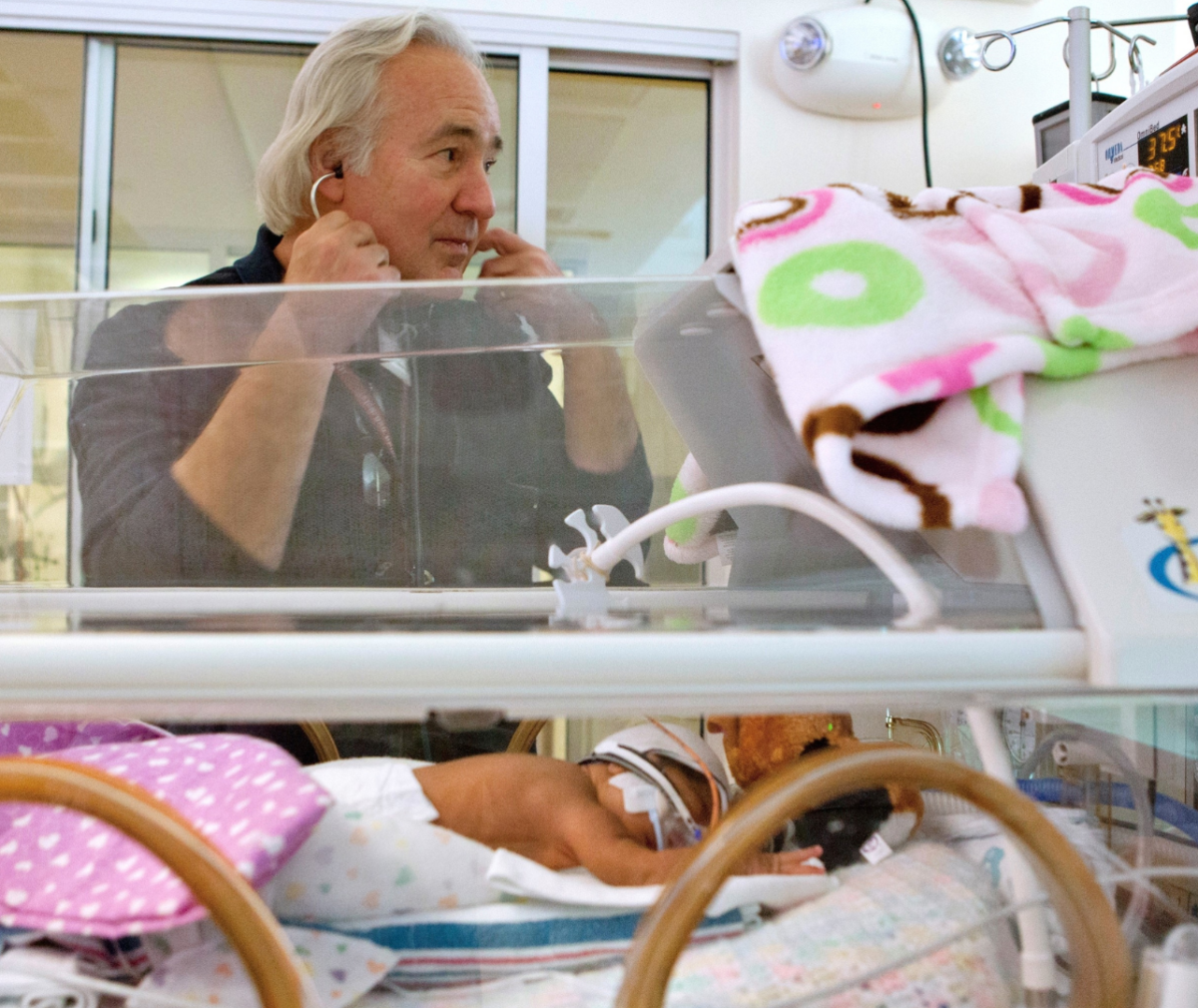
At Lucile Packard Children’s Hospital Stanford, many of our youngest, most vulnerable patients are babies born too soon. For their families, an early arrival can mean weeks or months in the hospital, uncertainty about their child’s health, and a very different beginning than they had imagined.
Approximately 1 in 10 babies is born prematurely, and complications of preterm birth remain the leading cause of death among children under age 5 worldwide. Those who survive past infancy may face lifelong health challenges. Despite decades of progress in the care of premature infants, preventing early birth has remained an enormous challenge. Stanford researchers are determined to change that.
As David Stevenson, MD, director of Stanford’s Վաղաժամ ծննդաբերության հետազոտական կենտրոն, explains, “We’ve made tremendous advances in caring for premature babies, but the most powerful thing we can do is prevent them from being born too early in the first place.”

This Prematurity Awareness Month, we’re highlighting how your generous gifts advance research that could give more babies a healthy start:
Harnessing AI to Help Prevent Premature Labor
Pregnancy presents a remarkable biological challenge: because a developing fetus inherits half its genes from the father, the maternal immune system must adapt to support a pregnancy, whose genetic makeup is half-foreign. When this delicate immunological balance is disrupted, labor can begin too soon.
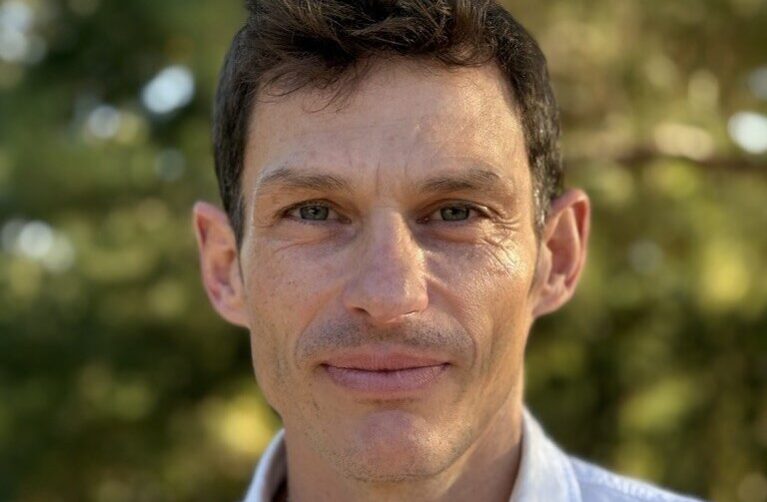
Brice Gaudillière, MD, PhD, is working to understand the immune and biological changes that contribute to premature birth. Building on earlier research that identified a maternal “immune clock,” Dr. Gaudillière and his team combine maternal blood samples with machine learning to create a “digital twins”—a virtual model of a pregnant person’s immune system.
In October 2026, the team published a study demonstrating how this technology helped identify a combination of two existing medications, Aspirin and Prevacid, that together delayed labor in an animal model. The team recently received FDA approval to proceed with a human clinical trial, bringing researchers closer to testing a potential new approach to preventing premature birth and giving more babies the time they need to grow and develop before entering the world. This will be the first new treatment trial to prevent premature birth in 30 years!
End Prematurity
Accelerate groundbreaking research to help more babies get a healthy start in life.
Predicting Complications and Personalizing Care
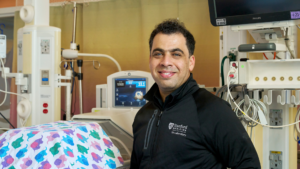
Նիմա Աղաիպուր, փիլիսոփայության դոկտոր, is challenging the assumption that all premature babies face the same risks. By combining blood samples from newborns with artificial intelligence, his lab aims to identify which babies need closer monitoring and specialized care, even before complications develop.
In January 2026, Dr. Aghaeepour and colleagues David Stevenson, MD; Alan Chang, MD; Jonathan Reiss, MD; Gary Shaw, DrPH; and Karl Sylvester, MD, published research demonstrating how AI can identify biological patterns associated with serious complications affecting the brain, lungs, eyes, and digestive system of babies born early.
Analyzing data from more than 13,000 premature babies in California, the team developed a model that predicted these complications with greater than 85% accuracy when blood measurements and clinical information were combined. These findings could pave the way for earlier interventions and more personalized care for premature babies. The study also offers new insights into why different complications develop, potentially helping researchers find ways to prevent serious health problems before they arise.
Dr. Stevenson is helping advance this work by rethinking how clinicians assess risk factors for premature infants. Traditionally, babies have been classified largely by their gestational age at birth, even though those born at similar gestational ages can experience very different outcomes. By identifying risks before complications arrive, researchers hope to give care teams a chance to act sooner with treatments tailored to a baby’s individual needs.
Revealing Risks Earlier
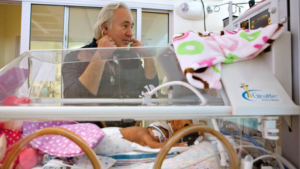
Preeclampsia occurs when expectant mothers experience dangerously high blood pressure during pregnancy. It impacts about 8% of expectant mothers globally and is a leading cause of maternal death and preterm birth. In the U.S., the rate of preeclampsia in Black women is approximately 55% higher than in white women (citation).
Using machine learning to study hundreds of biological markers in the blood, Ivana Marić, PhD, and her team identified a specific protein ratio that can be measured with a simple urine test as early as 10 to 12 weeks into pregnancy, before preeclampsia symptoms arise and while preventive therapies like low-dose aspirin are most effective. Now being validated in two larger studies, the test has the potential to provide an affordable screening tool for preeclampsia, particularly for communities with limited access to specialized medical care.
In a 2025 study, Dr. Marić used machine learning to identify patterns in maternal blood lipids (fats), associated with premature birth and babies born smaller than expected in low- and middle-income countries. These findings could lead to more accessible screening tests, again giving clinicians an earlier opportunity to intervene and protect mothers and babies before complications arise.

Understanding the Mighty Placenta’s Role During Pregnancy
The placenta is a remarkable organ, delivering oxygen and nutrients to a developing baby while supporting a healthy pregnancy. When it doesn’t function properly, serious complications can arise, sometimes making premature delivery medically necessary.
Virginia Winn, MD, PhD, studies how the placenta develops and what happens when that process goes awry, particularly in cases of preeclampsia, a potentially dangerous pregnancy complication involving high blood pressure. Her research focuses on identifying molecular changes associated with preeclampsia and understanding how pregnancy-related high blood pressure can result in a baby’s early birth and impact a mother’s cardiovascular health long after delivery. These insights could lead to earlier detection and better treatments, potentially reducing the need for early delivery.
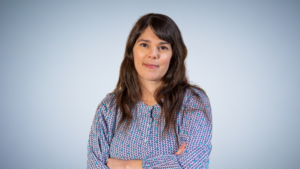
Kristy Red-Horse, PhD, investigates how the placenta reshapes a mother’s blood vessels to ensure a steady supply of oxygen and nutrients to her developing baby. Using advanced 3D imaging in animal models, her team has identified molecular signals that help guide this critical process. Their findings could lay the groundwork for new approaches to understanding and potentially treating serious pregnancy complications, including placenta accreta, a condition in which the placenta attaches too deeply to the uterine wall.
Protecting Vulnerable Newborns Worldwide
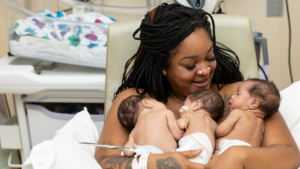
One of the most powerful ways to care for a premature baby is also one of the simplest: holding them close. Kangaroo care promotes skin-to-skin contact between newborns and their parents and offers important bonding benefits during a vulnerable time.
Gary Darmstadt, MD, partners with medical teams in resource-limited communities around the world to expand education and access to kangaroo care and other simple, affordable interventions that can improve newborn health and survival.
Dr. Darmstadt is also exploring how topical skin treatments, known as emollients, may strengthen the fragile skin barrier of premature infants. His research examines whether improving skin health and influencing microorganisms that live on the skin and in the gut can reduce serious infections and support healthier development.
Join Us in Creating Healthier Futures for Moms and Babies
Every scientific advancement brings us closer to a future where more babies have the time they need to grow and develop before birth, and where those born too soon have the best possible chance to thrive. Philanthropy helps fuel the discoveries and innovations that can make this possible. If you’d like to learn more about how you can help shape the future of prematurity research and care, we’d love to connect.