

Heart disease is the most common birth defect, with potentially devastating complications. Stanford’s decades of leadership and innovation in pediatric heart surgery have helped improve survival rates. But existing surgical techniques are reaching their limits.
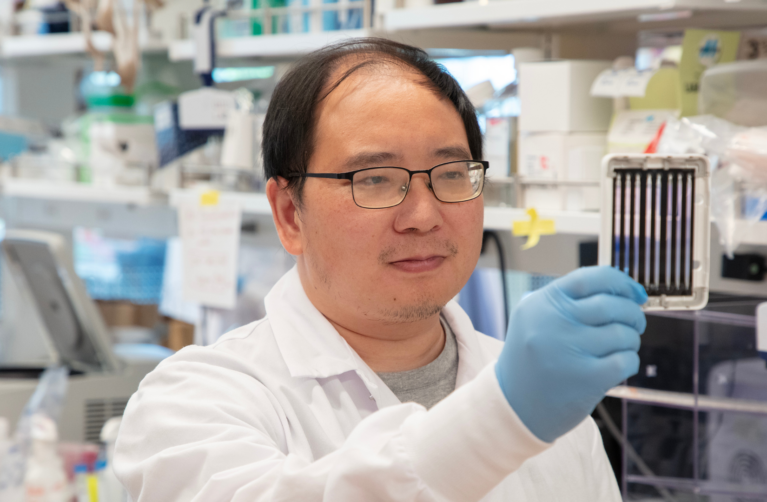
“Our job now is to build on the work of our pioneers and advance care through technology and research,” says Dr. Michael Ma, chief of Pediatric Cardiac Surgery.
In his quest to revolutionize pediatric heart surgery, Dr. Ma draws inspiration from Stanford’s proven innovation. The 베티 아이린 무어 어린이 심장 센터 leads the world in inventing surgical techniques that enable kids with heart disease to flourish.
“I am privileged to walk in the path of all the amazing clinicians and scientists that have paved the way to where we are today,” he says.
Dr. Ma uses today’s excellence as a launchpad to reinvent pediatric heart surgery. With interdisciplinary colleagues across Stanford, he is focused on groundbreaking new approaches. These include computational surgical modeling—planning complex surgeries by producing a 3D model of a patient’s heart. Dr. Ma is also expanding partnerships beyond cardiology and surgery to collaborate with bioengineers on entirely new scientific frontiers, such as using a child’s own cells as building blocks to 3D-bioprint new organs for transplant.
His vision is bold. “At an institution like Stanford—where we have a great marriage between medicine, engineering, basic science, and philanthropy—we aim to solve problems for patients everywhere.”
Your Support Forges Tomorrow's Care
With donor support, Dr. Ma’s work developing safer, individualized care will bring lifesaving treatments to more babies facing the most difficult prognoses.
Your Support Forges Tomorrow's Care
With donor support, Dr. Ma’s work developing safer, individualized care will bring lifesaving treatments to more babies facing the most difficult prognoses.
Saving Hazel’s Life With Computer Simulation
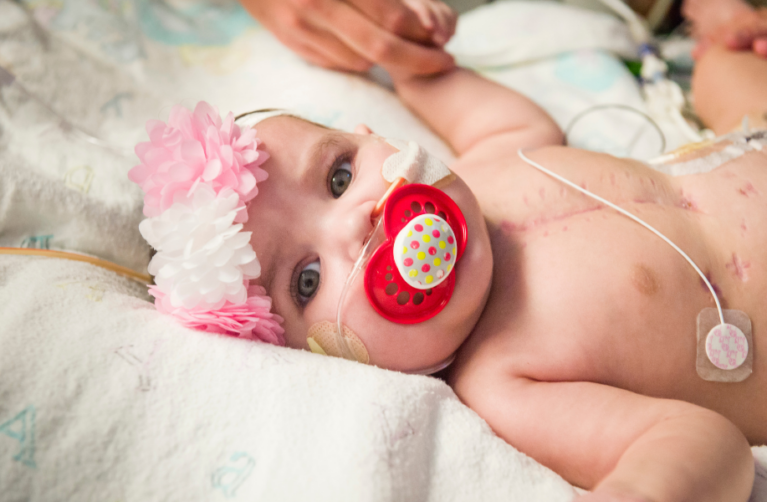
Dr. Ma’s patient Hazel was born with a rare, complex heart condition. Doctors at her hospital in Oklahoma said there was nothing they could do to save her life. They sent her home to spend her final months with her family.
Refusing to give up hope, Hazel’s parents reached out to Dr. Ma, the only surgeon willing to take her case. He used computational simulation—developed with colleagues in Stanford’s School of Engineering and the Moore Heart Center—to precisely map Hazel’s anatomy and build a 3D model of her aortic valve.
As part of a very complex, multipart cardiac surgery, Dr. Ma and his team followed this customized approach and reshaped Hazel’s aortic valve to match the simulation. The procedure took 12 hours.
Now 1 year old, Hazel is thriving and soon will be a big sister.
Dr. Ma’s vision is to significantly scale the use of computer modeling for pediatric heart surgeries, at Stanford and beyond. Donor support is crucial to ensuring more babies like Hazel get exactly the care they need.