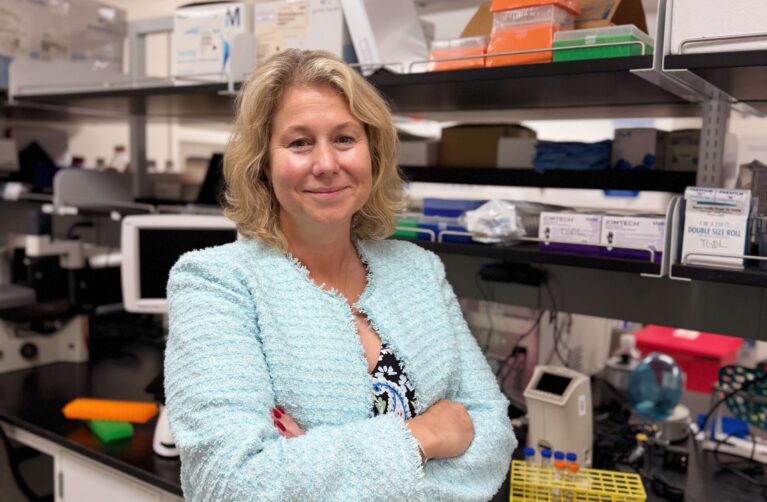

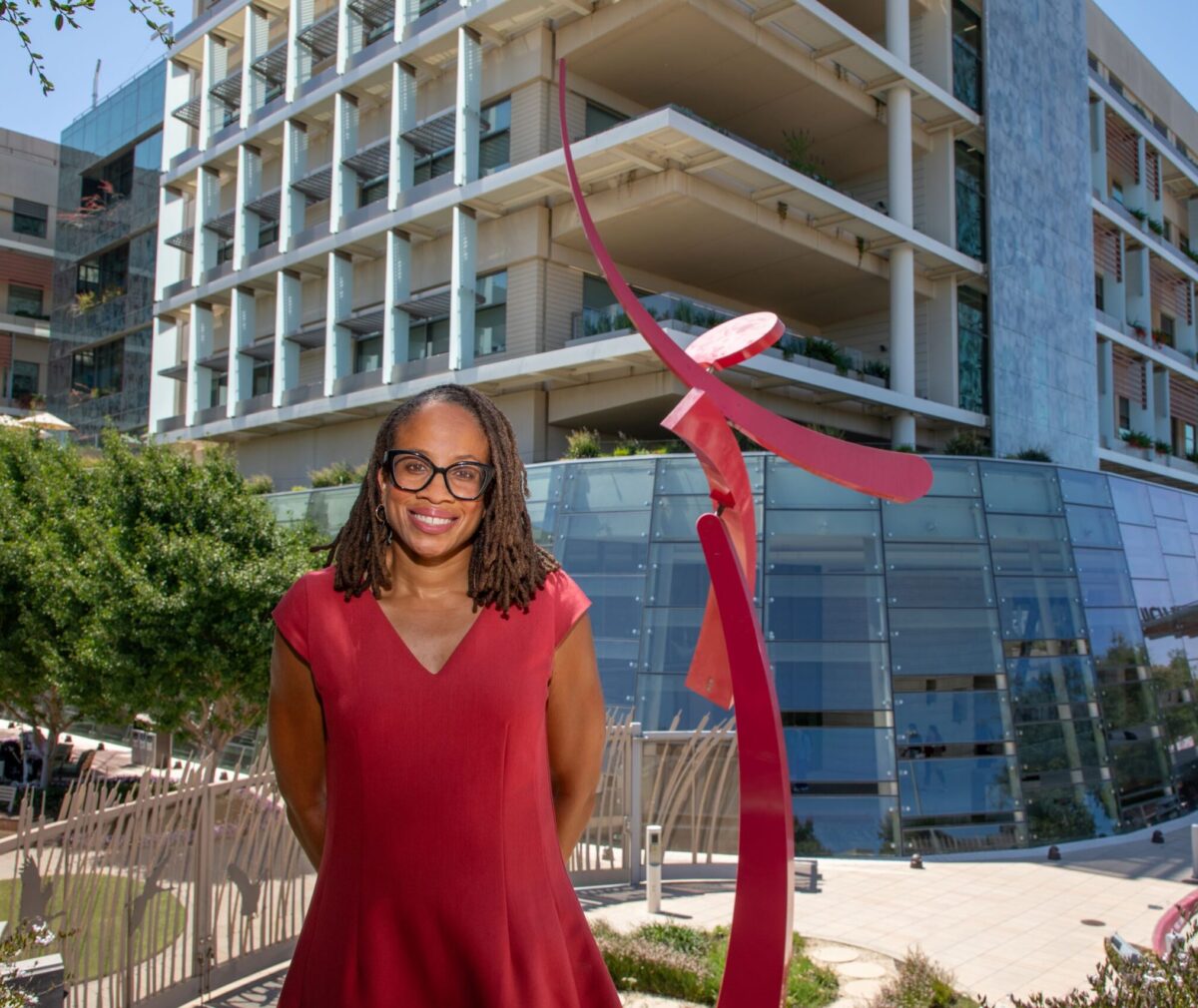
Ndidi Unaka, MD, MEd, strives to ensure families receive the best care regardless of their circumstances
At 10, Dwonya was losing weight and constantly tired, symptoms that led to a diagnosis of type 1 diabetes. His family also lacked stable housing, making their new regimen of carb-counting, finger-pricking, and manual insulin dosing even harder.

A small wearable sensor—a continuous glucose monitor—could have made all of that easier. But for years, getting one if you had public insurance meant clearing a hurdle families with private insurance never faced: weeks of manually logged glucose checks, submitted as proof before an insurer would approve the device. For a family without a permanent address, that kind of paperwork could be nearly impossible to keep up.
Stanford Children’s endocrinology team decided that gap wasn’t acceptable. Starting in 2018 with philanthropic funding, they began putting monitors directly into kids’ hands at diagnosis, insurance approval or not. A year later, children like Dwonya who got a monitor early were nearly twice as likely to hit their blood sugar targets as kids who didn’t.
Today, every child diagnosed with type 1 diabetes at Lucile Packard Children’s Hospital gets a continuous glucose monitor from day one. A family’s insurance plan, and the paperwork that came with it, no longer decides who gets one.
A Legacy Worth Building On
Our hospital’s founder, Lucile Packard, believed every child and family deserved excellent care, regardless of their ability to pay. Today, a dedicated team is turning that commitment into a data-driven, systemwide approach to close gaps in outcomes.
A new milestone came in 2024, when Ndidi Unaka, MD, MEd, joined Stanford Medicine Children’s Health as its inaugural chief health equity officer. The daughter of Nigerian immigrants, Unaka grew up in a family that, for a limited time, relied on public insurance, an experience that shaped how she approaches the work.
“Health equity means everyone has a fair and just opportunity to be as healthy as possible,” she says. “Every family deserves exceptional care. It shouldn’t be contingent on the type of insurance you have, what you look like, or the ZIP code you’re from.”
Unaka spent her first months building a five-year strategy around one basic question: Who is not getting the care or outcomes other patients receive, and why? Often, the reasons have little to do with what happens in the exam room. Food, housing, transportation, language, and financial stress can all get in the way. Unaka’s team designs solutions with patients and families, not for them, giving them a voice from the start.
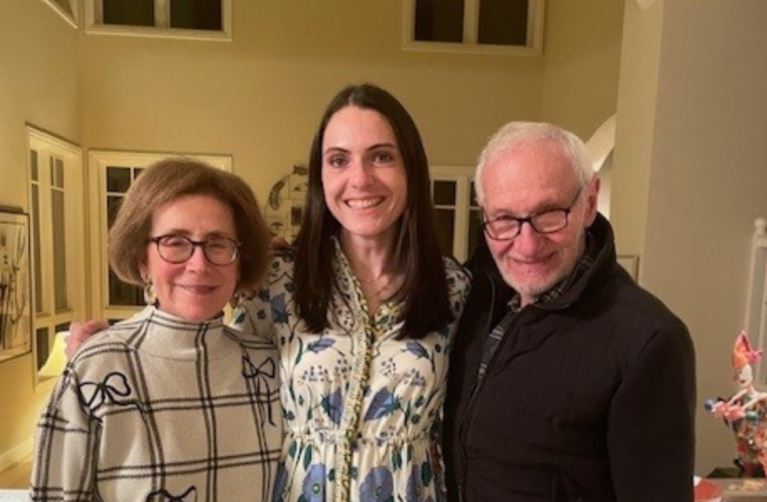
Tonia and Adam Karr recently established the hospitalʼs first endowed position dedicated to health equity, the Karr Family Directorship, which Unaka now holds. An estate gift from Rosemary League Mehrlich and a $25 million anonymous gift are strengthening systems for every child and family.
Since 2021, also thanks to donor support, the Stanford Maternal and Child Health Research Institute has awarded $1.7 million in community-engaged research grants across more than 20 departments, enabling teams across our hospital to find where patient outcomes differ and test ways to close those gaps.
“Every mother and child deserves a fair shot at a healthy start,” says Tonia Karr, who serves on the boards of both the Lucile Packard Foundation for Children’s Health and Lucile Packard Children’s Hospital. “This work is personal to me. Dr. Unaka’s leadership doesn’t just change outcomes for one family. It changes the systems that shape outcomes for every mother and child who comes after.”
Connecting the Work
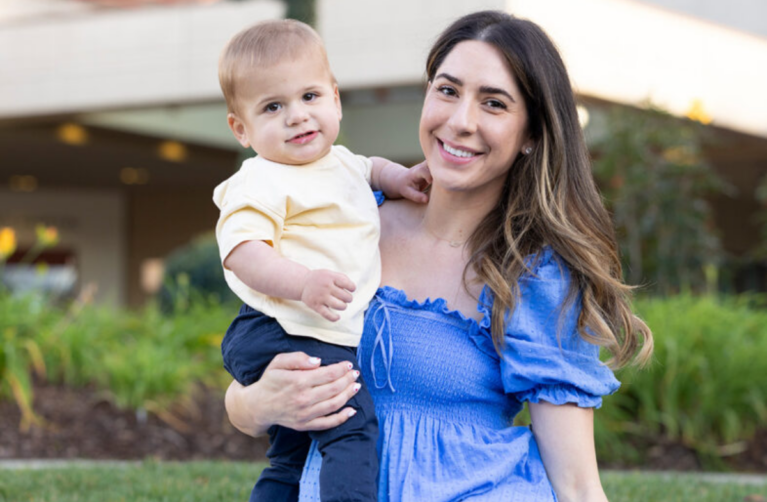
Unaka’s office builds on years of equity work already underway. She collaborates with the Office of Child Health Equity, co-led by Ryan Padrez, MD, and Janine Bruce, DrPH, MPH, in Stanford’s Department of Pediatrics, bringing hospital leaders, clinicians, and community partners together to tackle the most pressing health inequities.
One effort helps children treated for brain tumors or other serious illnesses return to school, since treatment can change how they learn and think, with real consequences for their educational futures. The program connects hospital specialists with schools and a parent-led support network, so families without the means to navigate that transition on their own get the same support as those who do.
In San Mateo County, Stanford researchers are studying Baby Bonus, a pilot following 1,200 families from a child’s birth to age 3. About half are matched with a community health worker, and of those, 300 also receive a $300 monthly stipend, while the rest form a comparison group so researchers can measure the difference. Padrez’s team is tracking food security, utilization of community services, and how often kids see a doctor.
Maternal health is another focus. Stanford leads the California Maternal Quality Care Collaborative, whose statewide work has helped lower California’s maternal mortality rate over the past two decades, even as Black and Indigenous mothers continue to face a far greater risk of pregnancy-related death nationally.
“Our equity work in the maternal space must begin far before a mother shows up to deliver,” Unaka says. That means looking at factors such as housing, income, chronic conditions, and access to care long before pregnancy and delivery.
Sharing Lessons Learned
A commitment to health equity is ingrained in how Stanford trains future physicians. Through a program founded more than two decades ago, residents, fellows, and medical students work with community organizations as a required part of their training.
“We’re training the next generation of pediatric providers to think about equity,” Bruce says.
The goal is not just new programs; it’s to learn what works, build it into routine care, and share those lessons beyond Stanford.
For families like Dwonya’s, that approach is already changing what care looks like. The clinicians behind it say the real goal is bigger than one hospital: a future where no family has to prove they deserve the care their child needs.