

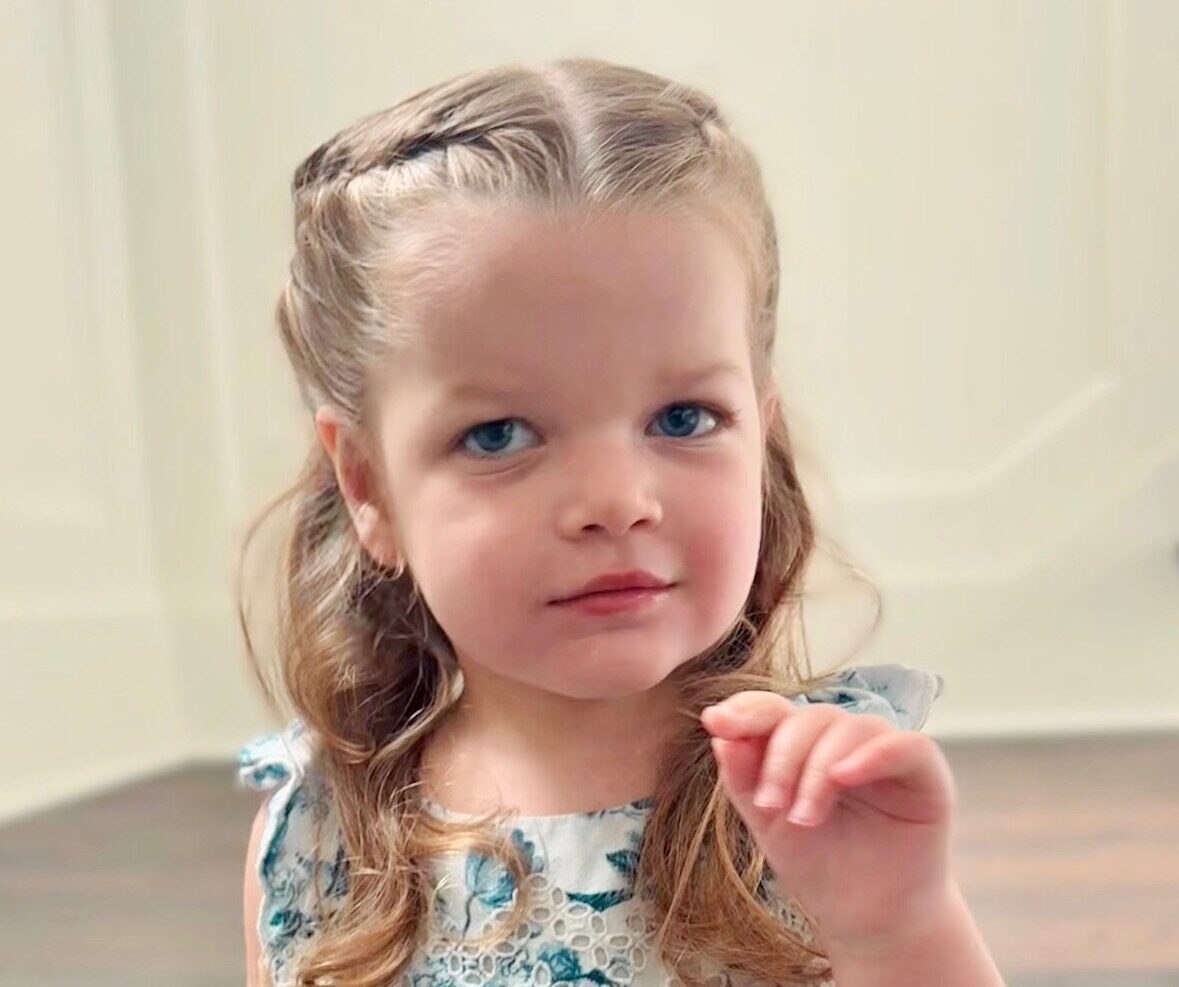
As early as when Isa Elaine was 6 months old, Chris Lazzara knew something wasn’t quite right with his daughter. Her physical development was slightly behind her two older sisters’. Doctors in their hometown of Jacksonville, Florida, recommended physical therapy and monitored her progress.
Just weeks after her first birthday, an abnormal MRI revealed that Isa Elaine had beta-propeller protein-associated neurodegeneration (BPAN), a rare and progressive neurodegenerative disease.
Determined to make a difference, Chris founded the Isa Elaine Foundation in 2024 to advance research for BPAN and other neurodegenerative diseases. The Foundation recently made a generous $500,000 gift to launch the Isa Elaine Foundation Research Fund at the スタンフォード大学医学部.
“Nothing prepares you for learning that your child has an incurable disease,” says Chris. “After my daughter’s diagnosis, we immediately began searching for answers, which is how we learned about the promising research happening at Stanford.”
The Isa Elaine Foundation Research Fund will support work led by Juliet Knowles, MD, PhD, assistant professor of neurology and neurological sciences and of pediatrics, to accelerate the development of treatments for children with BPAN. Currently, no cure or treatment exists for BPAN, which can lead to motor dysfunction, cognitive decline, seizures, and a shortened lifespan. Stanford is a leader in BPAN research, given its deep expertise in key areas such as neurodevelopment, neurodegeneration, and epilepsy.
Dr. Knowles is a physician-scientist who provides clinical care for children with epilepsy and has assembled a world-class team to study BPAN in human-derived cells and animal models. The Isa Elaine Foundation Research Fund will support their efforts to advance a first-of-its-kind plan to identify potential treatments that could move quickly to clinical trials. This screening includes FDA-approved drugs that could be repurposed for BPAN treatment.
With this gift, Chris and the Isa Elaine Foundation join other families of children with BPAN, who have come together as a small but powerful community to support Dr. Knowles’ research (read 彼らの物語).
In addition to BPAN, her research has the potential to benefit other rare pediatric diseases and more common neurological diseases such as Parkinson’s and Alzheimer’s. Insights from BPAN research may ultimately inform approaches that improve brain health across the lifespan.
At age 2, Isa Elaine may be the youngest person ever diagnosed with BPAN, and she is already the inspiration behind research that could change countless lives.
