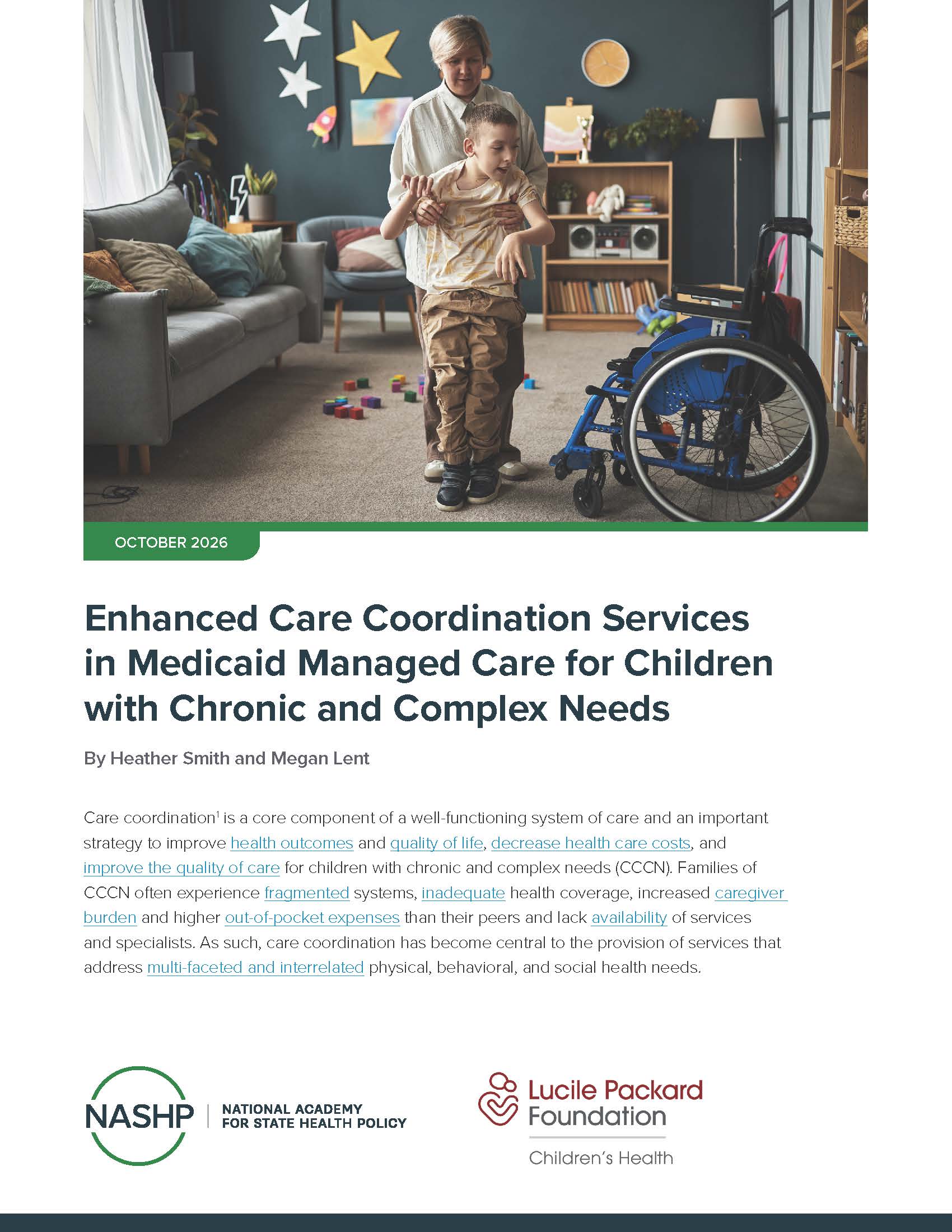
Расширенные услуги по координации медицинской помощи в рамках программы Medicaid для детей с хроническими и сложными потребностями.
Families of children with chronic and complex needs (CCCN) often experience fragmented systems, inadequate health coverage, increased caregiver burden, and higher out-of-pocket expenses than their peers without CCCN. For these reasons, care coordination is essential to the provision of services that address the multifaceted and interrelated physical, behavioral, and social health needs of CCCN.
Several states have implemented enhanced care coordination services and alternative payment models to better serve CCCN, more than 40% of whom rely on public health insurance for coverage. This brief, produced by the National Academy for State Health Policy (NASHP), examines state approaches to providing enhanced care coordination for CCCN in five states (Arizona, California, Michigan, Texas, and Washington) and Washington, D.C. NASHP analyzed state Medicaid managed care contracts and program policies across four areas of enhanced care coordination services for CCCN: 1) service provision, 2) eligibility and risk stratification, 3) care coordinator requirements, and 4) care plan management and beneficiary engagement.