
Stanford leads with innovation and compassion in treating kids with inflammatory bowel disease and celiac disease
No one looks forward to getting a colonoscopy. Now imagine how uncomfortable and overwhelming it must be for children with inflammatory bowel disease (IBD), who need regular colonoscopies to monitor their condition.
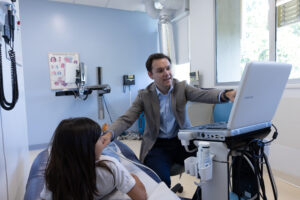
Doctors at the Stanford Medicine Children’s Health Center for IBD and Celiac Disease are rethinking the standard of care for children facing these challenging diseases. For example, the team is championing a new noninvasive approach: intestinal ultrasound. It requires no preparation, fasting, needles, or anesthesia, making it a more comfortable and low-stress alternative to colonoscopies. Ultrasound allows clinicians to assess bowel inflammation during routine clinic visits, providing real-time insights into the effectiveness of treatment.
Since the Center for IBD and Celiac Disease launched in March 2022 thanks to a transformative philanthropic gift, it has quickly become a national leader. Families who once had to travel to the East Coast for expert care now come to Stanford. A key reason is the outstanding outcomes the center achieves for children with rare and complicated IBD. In 2024, 87% of patients reached remission—one of the best remission rates in the country.
“Hundreds of patients are living mostly pain-free, active lives and growing normally. They can be kids—go to summer camp with friends, and play sports,” says マイケル・ローゼン医学博士、MSCI, director of the center and an international expert on pediatric IBD. “For families, it means hope, relief, and the chance to experience everyday joys without the constant worry of illness.”
Finding the Right Doctor
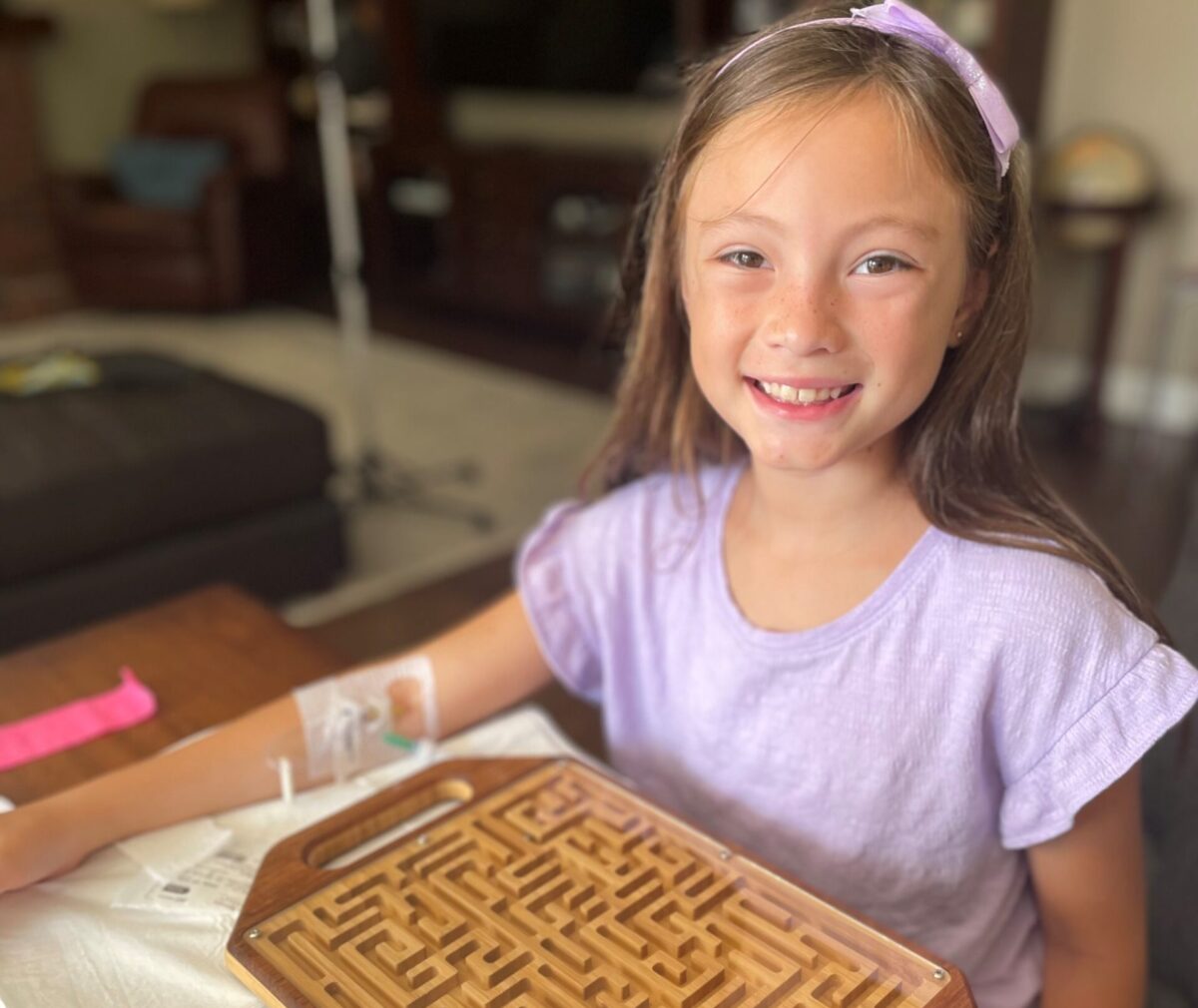
One such patient is 9-year-old Abigail (Abby) from Visalia, California, whose symptoms started with severe constipation when she was 3 years old. It took local doctors several years to diagnose her with early-onset Crohn’s disease, a rare form of IBD that causes redness, swelling, and sores along the digestive tract.
Desperate to find the right care for Abby, her parents turned to Stanford’s Center for IBD and Celiac Disease, where they met Rosen. “After all that we’d been through, we were thrilled to learn about Dr. Rosen and his expertise in treating very early-onset IBD,” says Abby’s mom, Brittani.
Rosen recommended a drug given by infusion to reduce the inflammation in Abby’s gut. Drugs for IBD don’t always work on the first try—this one did! Abby began to heal and quickly achieved remission.
Abby’s family also relied on support from the center’s expansive team that includes clinical psychologists, social workers, dietitians, pharmacists, and nurse educators—who work together to not only treat the disease, but treat the whole child and family.
“We do everything in our power to ensure that kids and families in our care are thriving physically and mentally,” says Rosen.
In just a few years, the center has built a thriving community for children with IBD and celiac disease and their families—hosting support groups for children and parents, a peer mentorship program, and an annual daylong event complete with gluten-free food.
Turning to Science
The center is also advancing the science behind IBD and celiac care. Team members analyze data from hundreds of biological samples and partner with Stanford researchers in fields like engineering, immunology, chemistry, and molecular biology. One example: Calvin Kuo, MD, PhD, is using organoids (clusters of cells grown in a dish) to model IBD and celiac disease and predict how patients will respond to different treatments.
These studies and clinical trials are improving care and leading to new diagnostic techniques, new medicines, and better support for children with IBD and celiac disease— not only at Stanford, but nationwide.

The center’s Ruben Colman, MD, PhD、 そして Perseus Patel, MD, are among the first pediatric gastroenterologists in the U.S. to be trained in ultrasound, and now they are teaching other pediatric and adult gastroenterologists to use the technology. Colman also leads the first-ever study funded by the National Institutes of Health to evaluate the use of intestinal ultrasound for children with Crohn’s disease.
Game-changing tools like intestinal ultrasound are just the beginning—enabling children with IBD and celiac disease to live their best lives.
Abby is still in remission and doing the things she loves—creating art, dancing, practicing gymnastics, baking sweets, and playing with her pet hamster. Her family is grateful for the donors who support the center’s important work.
“This generosity translates to tangible health benefits for families with children living with IBD,” says Brittani. “Access to such world-class care and expertise is an absolute blessing to us.”
Abby is enjoying life in remission. In order to stay healthy, she returns to Lucile Packard Children’s Hospital for regular infusions of medication.
Ruben Colman, MD, PhD, is a leader in using intestinal ultrasound to monitor IBD.