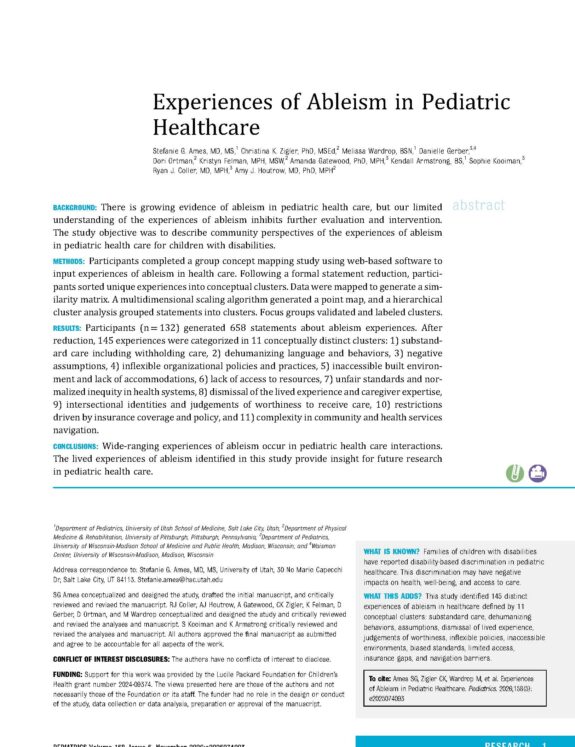
Treat Us Like Humans: Lived Experience Solutions to Improve Health Care for Multiply Marginalized Children with Disabilities
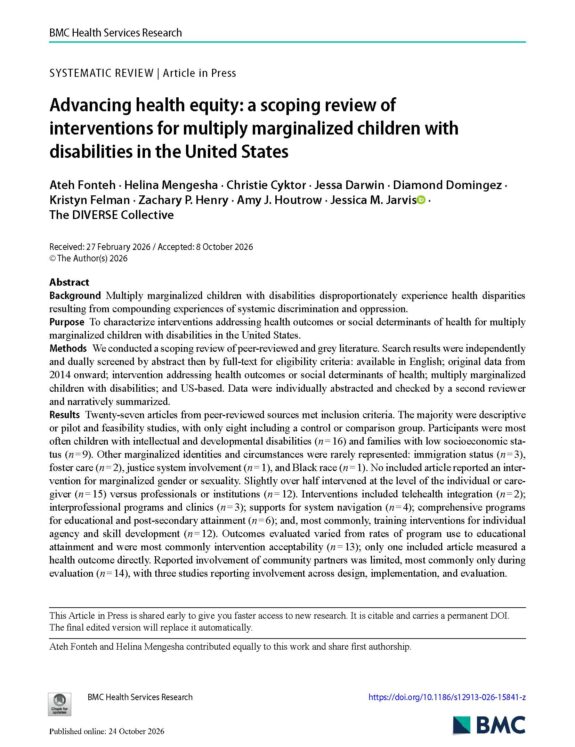
Children with disabilities who hold one or more other marginalized identities face compounded marginalization from the discrimination and inequities tied to each identity. These overlapping disadvantages contribute to disparities in health care access, care quality, health outcomes, and mortality.
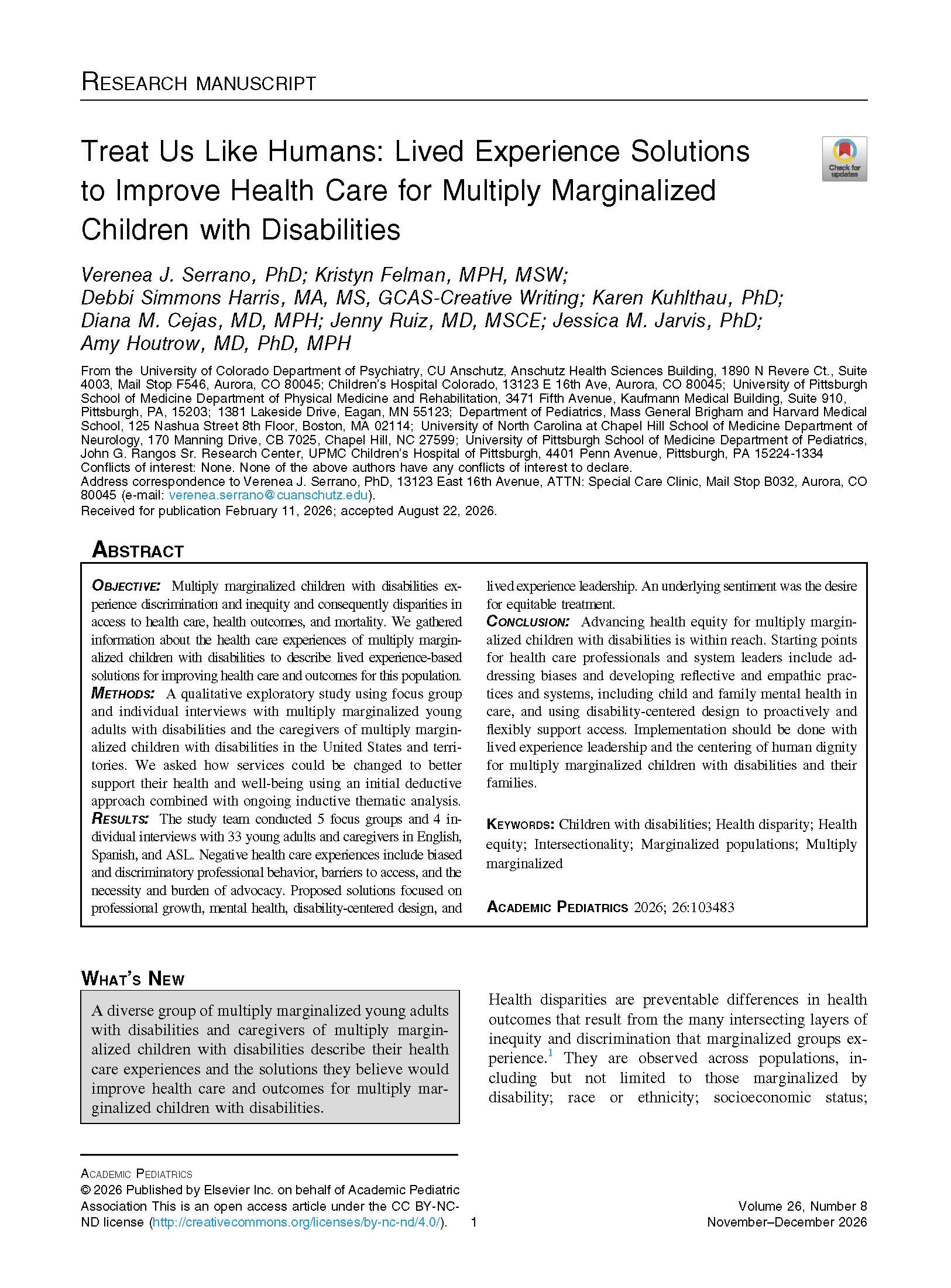
A study published in Academic Pediatrics used focus groups and individual interviews in English, Spanish, and American Sign Language to examine the health care experiences of multiply marginalized children with disabilities and to identify solutions grounded in lived experience. The multidisciplinary research team centered the lived experience of members with disabilities and other marginalized identities, and study participants included multiply marginalized young adults with disabilities and caregivers of multiply marginalized children with disabilities. The participants described negative health care experiences, including biased and discriminatory professional behavior, barriers to access, and the burden of advocacy.
To promote health equity and dignity, participants proposed addressing personal biases and building reflective, empathetic practices and systems; integrating child and family mental health and well-being into care; and using disability-centered design to address access barriers.
Download the journal article (PDF) below.
Journal Article