
Lucile Packard Children’s Hospital is reshaping the field of pediatric surgery
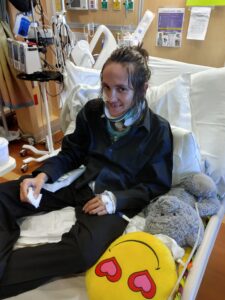
Fifteen-year-old Dakota was riding an all-terrain vehicle near his Nevada home when he collided with a road sign, shattering his windpipe and severing his trachea. His life-threatening injuries required the highest level of care, including airway reconstruction—expertise his local hospital could not provide. But they knew who to call.
Karthik Balakrishnan, MD, MPH, a renowned aerodigestive and airway reconstruction surgeon at Lucile Packard Children’s Hospital Stanford, responded without hesitation. He and colleagues from pediatric surgery and intensive care quickly assembled a team that flew to Reno, supported local physicians in setting up the technology needed to stabilize Dakota, and then transported him to Palo Alto.
Within an hour of arriving at Packard Children’s, Dakota was in the operating room for an 11-hour reconstructive surgery that involved experts from ENT (ear, nose, and throat), general surgery, critical care, and anesthesiology. More than a dozen specialists provided care for him, exemplifying how teams at Stanford unite seamlessly around every patient. Two months later, Dakota was home, eating by mouth and talking normally. He’s now living his life as a typical teenager—back at school and hanging out with friends.
Balakrishnan believes Dakota’s injuries were serious enough that at almost any other hospital, he likely would not have survived.
Rising Need for Surgical Care
Not all children experience the same positive outcome as Dakota.
“A leading cause of childhood death is a lack of access to high-quality surgical care,” says Balakrishnan. “Common childhood conditions like congenital anomalies and injuries often require surgery. Too many kids, however, don’t have access to specialized surgeons—in the U.S. and worldwide. Packard is in a position to change that statistic for kids everywhere.”
Packard Children’s has risen to meet growing demand—surgical volume has increased by 35% over the past five years with growth expected to continue. The hospital now performs more than 15,000 surgeries and procedures annually to treat a range of childhood conditions—from common ailments like appendicitis to rare conditions that require complex, multidisciplinary treatment. Patients come from 46 states and 35 countries for care that is available at few other places in the world—and, in some cases, only here.
One only-at-Stanford procedure is dual immune/solid organ transplant (DISOT), pioneered by Alice Bertaina, MD, PhD, and Paul Grimm, MD, PhD. With DISOT, a child first receives a stem cell transplant, which is then followed by a kidney transplant a few months later. Thanks to DISOT, more patients will be able to receive organ transplants and live free from lifelong immunosuppressive drugs and their devastating complications—transforming what was once impossible into a new standard of care.
Techniques like DISOT are why Packard Children’s Pediatric Kidney Transplant Program ranks No. 1 in the country for volume and has the best outcomes—a 100% survival rate after one and three years.
In another first, the cardiac surgery team, led by Michael Ma, MD, is working with bioengineer Alison Marsden, PhD, to use 3D models of patientsʼ hearts to test surgical approaches before performing the procedure. (See Hazelʼs story on page 12 to learn more about how this groundbreaking modeling method improves care for even the smallest patients with the most serious conditions.)
“One of our teamʼs standout traits is a willingness to take on really complex patients and be their place of last resort. Some heart centers are not willing to take the risk, and I am so proud that we do because itʼs a childʼs life thatʼs in the balance,” says Ma. “Whatʼs considered high-risk for some children’s heart centers is often normal risk for us.”
This spirit of innovation extends even to patients still in the womb. Within the Fetal and Pregnancy Health Program, the fetal therapy team led by Yair Blumenfeld, MD, offers the potential to surgically correct birth defects like spina bifida in utero. The goal is to help the unborn child with as little impact on the mother as possible through research and the most advanced treatments.
Redesigning the Patient Experience
Philanthropy has built Packard Childrenʼs into one of the nationʼs premier pediatric hospitals for surgical care. Now Balakrishnan, who is also the Susan B. Ford Surgeon-in-Chief, has a vision to create the most streamlined patient and family experience, starting from referral and moving through surgical care and recovery.
“Surgery is hard for any family. For families who don’t speak English or who have limited resources, it’s even harder,” says Balakrishnan. “We must remove every possible roadblock so all patients float, rather than stumble, through our halls.”
One way that Packard Children’s Hospital does this is by providing comprehensive care that supports the entire family and lets kids be kids. Thanks to philanthropic support for wraparound services, art therapists help children in the hospital express their thoughts and feelings through creativity, and interpreters and chaplains help families understand and cope with their child’s illness.
During rehab for his injuries, Dakota relied on support from multiple teams, such as respiratory therapy, nutrition, occupational therapy, and speech-language pathology. With his mom, Deana, he attended social events that brightened his spirits such as the hospital’s Prom and the premiere of the movie Inside Out 2, put on by Child Life and Creative Arts.
“When it comes to our kids, there are no egos. Our focus is always, ‘How can we provide the best care for the whole child and family?’ ” says Balakrishnan.
Revolutionizing Care Through Robots
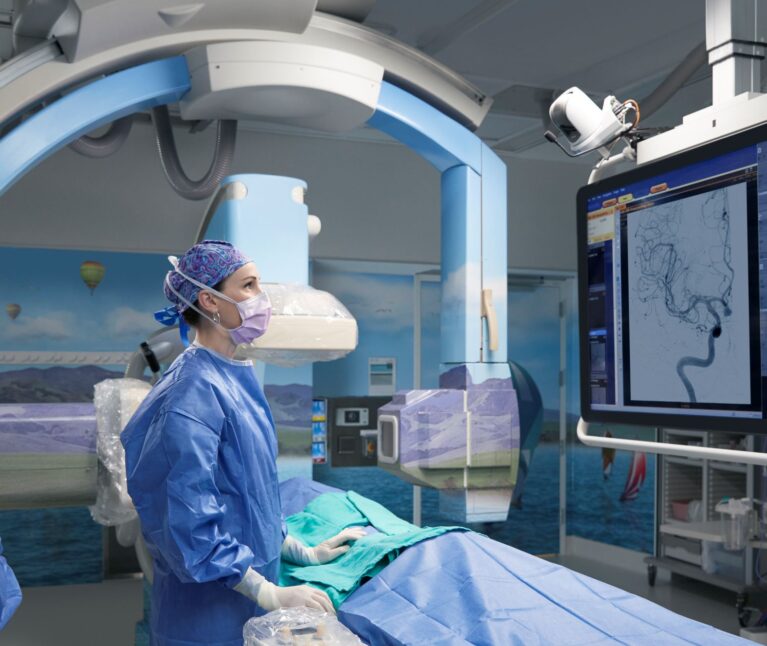
Balakrishnan is also leading efforts to make robotic surgery available to every child who would benefit. The advantages of robotic technology are enormous: Surgeons gain magnified 3D vision and greater control that results in more precise surgery. For kids, this potentially means smaller scars, faster recovery, shorter hospital stays, and significantly reduced complications and trauma.
Packard Children’s is the only hospital in Northern California to use a ROSA robot to assist with minimally invasive brain surgeries for childhood epilepsy and other neurological conditions. And in June, Packard Children’s received FDA approval to expand the scope of robotic surgery’s impact by leading a landmark clinical trial for nine additional surgical procedures across multiple specialties using the da Vinci robotic system. The study is a pivotal step in advancing and adopting robotic children’s surgery and in developing a one-of-a-kind comprehensive pediatric robotic surgery program.
As the team continues to push the boundaries of what’s possible, Balakrishnan sees potential to become the destination for pediatric robotic surgery. “We want to leverage the technology that made Silicon Valley famous,” says Balakrishnan. “Here, we say yes to big ideas.”
About Karthik Balakrishnan, MD
Susan B. Ford Surgeon-in-Chief
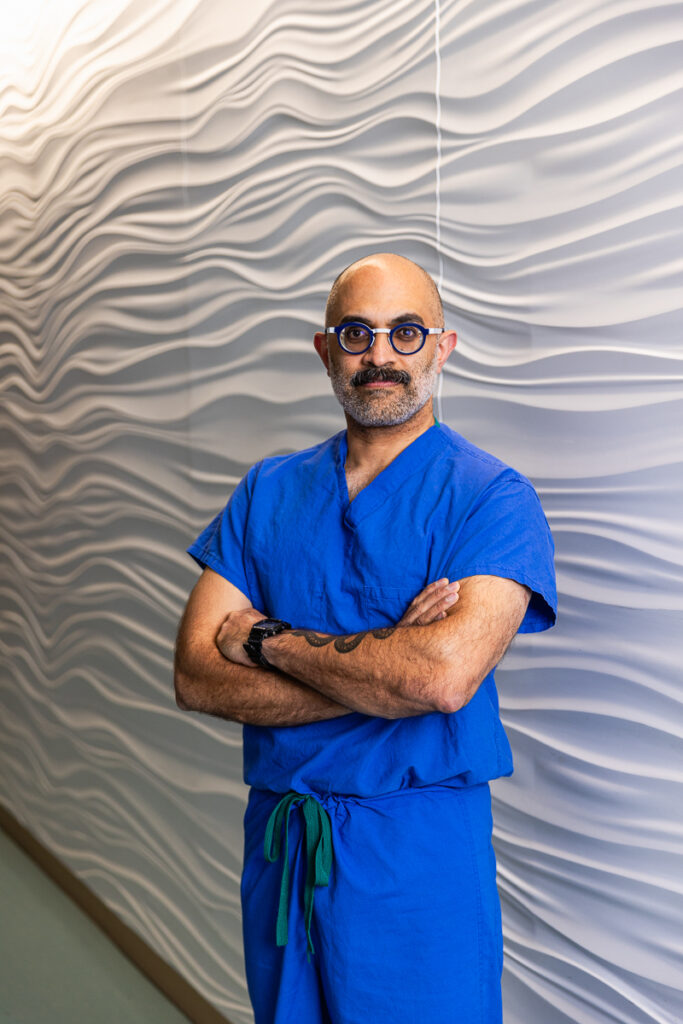
He did his homework in hospital hallways while his parents, both physicians, cared for their patients.
He is an accomplished pianist who believes performing surgery is like playing an instrument: Both require practice and adaptability. “Musicians and surgeons know how to adapt during an unforeseeable challenge or a moment of crisis!”
He discovered his love of teaching as an undergrad at Harvard University, and he worked as a high school teacher before attending medical school at Johns Hopkins University.
He joined the Stanford faculty in 2020. He is a passionate advocate for quality, safety, and value of pediatric surgical care for all.