
Skip to content

Home > Science Under the Stars

Science Under the Stars 2026

The Precision Revolution

An annual invitation-only evening brings Stanford research out of the lab and under the stars. 

The researchers featured at Science Under the Stars 2026 are leading a Precision Revolution: from medicine that works for most, to medicine made for each. They are harnessing AI to predict dangerous pregnancy complications before they begin, decoding the genetic causes of diabetes to unlock treatments tailored to each child’s biology, and delivering therapies to injured organs with an accuracy that was unimaginable just a few years ago.

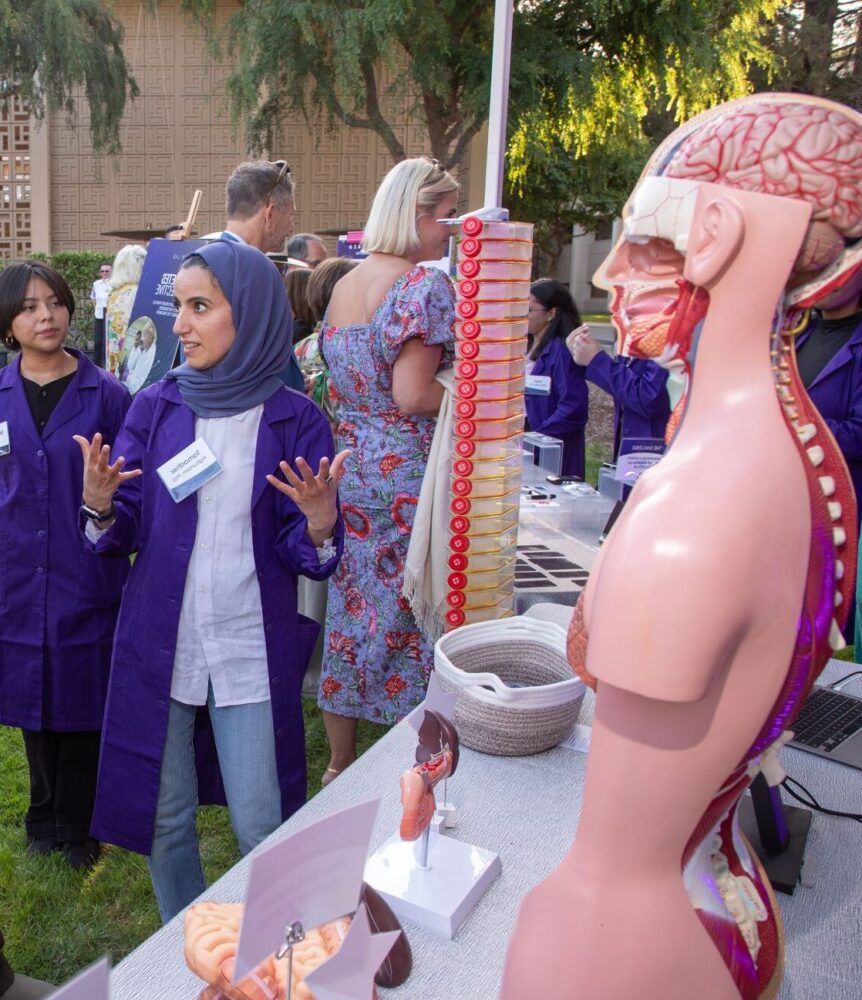
At an outdoor event, a man in a tweed jacket named John Banning talks with two researchers in purple lab coats, Tamadher Alghunaim and Esmeraldo Matos, beside a table displaying anatomical models including a transparent torso, brain, and pancreas. Other attendees mingle on the lawn in the background near a lattice-patterned building

A Night of Breakthroughs

An annual, invitation-only evening where Stanford research leaves the lab and meets the night sky. This year, we highlighted researchers who are predicting pregnancy complications with AI, personalizing diabetes treatment through genetics, and targeting therapies to the body's most fragile organs.

Our 2026 Featured Faculty

Meet three of the most innovative minds in pediatric and maternal medicine. While their work spans genetics, computational biology, bioengineering, immunology, radiology, and surgery, they are united by a singular vision: precision medicine that reaches every patient, everywhere.
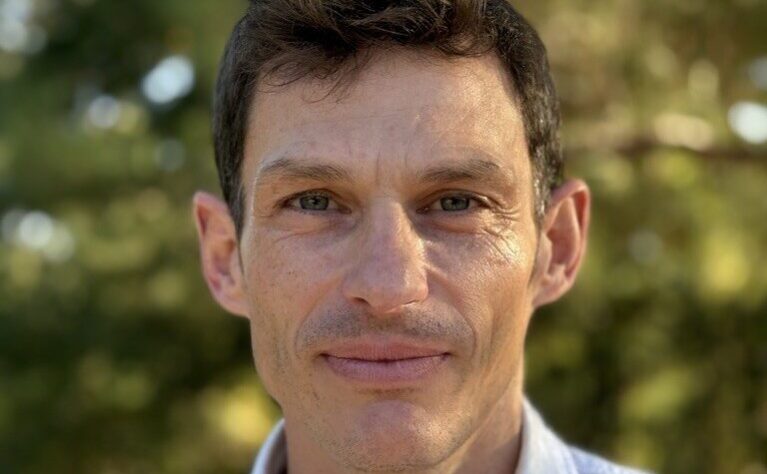
Professional headshot of a man with short, wavy dark brown hair, smiling warmly at the camera. He has fair skin, green eyes, and light stubble, and is wearing a white button-down collared shirt with a thin necklace visible at the neckline. The background is a softly blurred outdoor scene of green foliage, suggesting natural daylight.

Brice Gaudilliere, MD, PhD: Harnessing AI and Immune Signatures for Healthier Pregnancies

Preterm birth is the leading cause of death in children under five worldwide—and for decades, medicine has had no reliable way to predict or prevent it. Brice Gaudilliere, MD, PhD, found an unexpected key in the maternal immune system: a biological “immune clock” that tracks pregnancy week by week, whose deviations can signal danger months before any symptoms appear. That discovery is now powering a digital twin platform—and what may be the most consequential clinical trial to prevent preterm birth in a generation. 
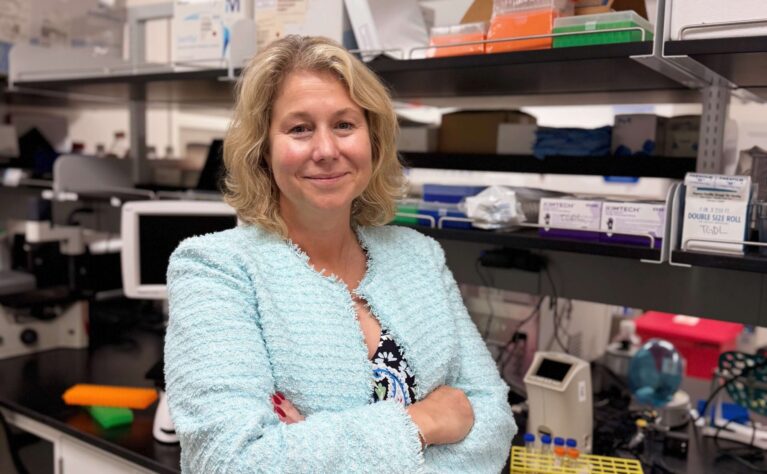
A woman with wavy shoulder-length blonde hair stands with arms crossed in a laboratory, smiling at the camera. She wears a light teal textured cardigan over a dark floral paisley top and skirt. Behind her, lab shelves hold pipette tip boxes, Kimtech wipes, and other supplies, while the black countertop displays a yellow test tube rack, several white multichannel pipettes, and assorted lab equipment.

Anna L. Gloyn, DPhil: Unlocking the Genetic Code of Diabetes to Revolutionize Care

“Diabetes” is not one disease—it is many. Getting the diagnosis right is essential to finding the right treatment but today, up to 85% of monogenic diabetes (caused by a change in a single gene) are missed or misdiagnosed. Anna Gloyn, DPhil, has built a career as a geneticist and a diabetes detective. At Stanford she is building something that has never before existed: a comprehensive catalogue of every possible variant in monogenic diabetes genes, so that every child can get an accurate diagnosis and the best available treatment as quickly as possible.

Professional headshot of a man with short, wavy dark brown hair, smiling warmly at the camera. He has fair skin, green eyes, and light stubble, and is wearing a white button-down collared shirt with a thin necklace visible at the neckline. The background is a softly blurred outdoor scene of green foliage, suggesting natural daylight. Ave Headshot copy (1).png and for this one Professional headshot of a man with short dark hair and a neatly trimmed beard, wearing rectangular glasses with dark frames. He has a serious, composed expression and is dressed in a charcoal gray textured suit, white dress shirt, and navy patterned tie. The background is softly blurred, showing warm wooden columns and light, suggesting an indoor architectural setting.

Avnesh (Ave) Thakor, MD, PhD: Powering a New Era of Image-Guided Healing

Last year, a child arrived at Lucile Packard Children’s Hospital Stanford with a painful bone tumor. Avnesh (Ave) Thakor, MD, PhD, and his team treated it using focused soundwaves—no incision, no scalpel—and the child walked out the same day, tumor free. That case is one example of what Dr. Thakor is building as a pioneering interventional radiologist: a new pillar of precision medicine focused not just on finding and targeting disease, but on delivering treatment with an accuracy never before thought possible.
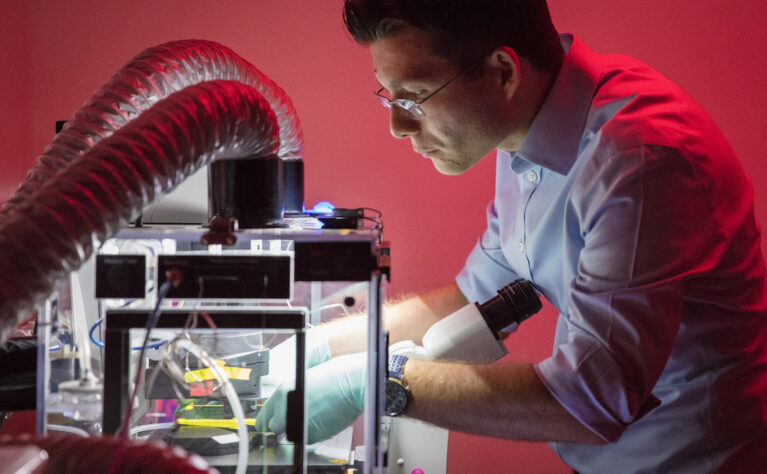
A researcher in a light blue collared shirt and glasses works intently on a piece of lab equipment, lit in red ambient lighting. He wears a blue nitrile glove on his right hand as he adjusts components inside a clear enclosure connected to a large ribbed exhaust tube. The setup includes various dark electronic modules, cables, and a small blue indicator light, suggesting a scientific or materials research experiment in progress.

Fuel the Next Breakthrough

The bold, high-risk science that leads to breakthroughs in child and maternal health rarely fits neatly into a funding formula. Philanthropic investment is critical to moving life-saving discoveries forward, quickly. 

Your gift to the Big Science Innovation Fund advances breakthrough science at Stanford Medicine Children’s Health for the children and families who need it most.

The Science Continues

The scientists who have shared their work at Science Under the Stars in years past continue to make significant advances, powered by the generosity of our philanthropic community.

Hheadshot of a woman with long brown hair, smiling warmly at the camera. She has dangling earrings, fair skin, and is wearing a white lab coat over a dark top, with laboratory shelving and foil-covered containers visible in the blurred background.

Alice Bertaina, MD, PhD

(2021, 2024)
Nima Aghaeepour, PhD

(2024)
Portrait of a woman with long dark hair standing with her arms crossed, wearing a white lab coat over a black top, gazing thoughtfully off to the side with a confident, composed expression. She's in a modern hallway with warm wood-slat paneling and soft overhead lighting in the background.

Kara Davis, DO

(2024)

A woman with short reddish-blonde hair and arms crossed, wearing a dark blazer with a teal scarf, standing outdoors in front of a building with large windows.

Crystal Mackall, MD 

(2025) 

Michael Ma, MD

(2025)

Michelle Monje, MD, PhD

(2023)

Matthew Porteus, MD, PhD

(2021)

Professional studio headshot of a woman with long, wavy auburn hair and green eyes, smiling warmly at the camera. She's wearing gold hoop earrings and a cream-colored textured top, photographed against a plain light gray background.

Anca Pasca, MD

(2023)

Sergiu Pasca, MD

(2025)

Close-up headshot of a man with short brown hair, smiling softly at the camera. He has fair skin and is wearing a blue-and-white checkered button-down shirt, photographed outdoors with a blurred background of trees and a modern building.

Mark Skylar-Scott

(2023)

Interested in Making a Major Gift? Let's Discuss.

Amena Ahmed, Associate Director, Major Gifts