
Gaps in Care Among Adolescents and Young Adults in the U.S.
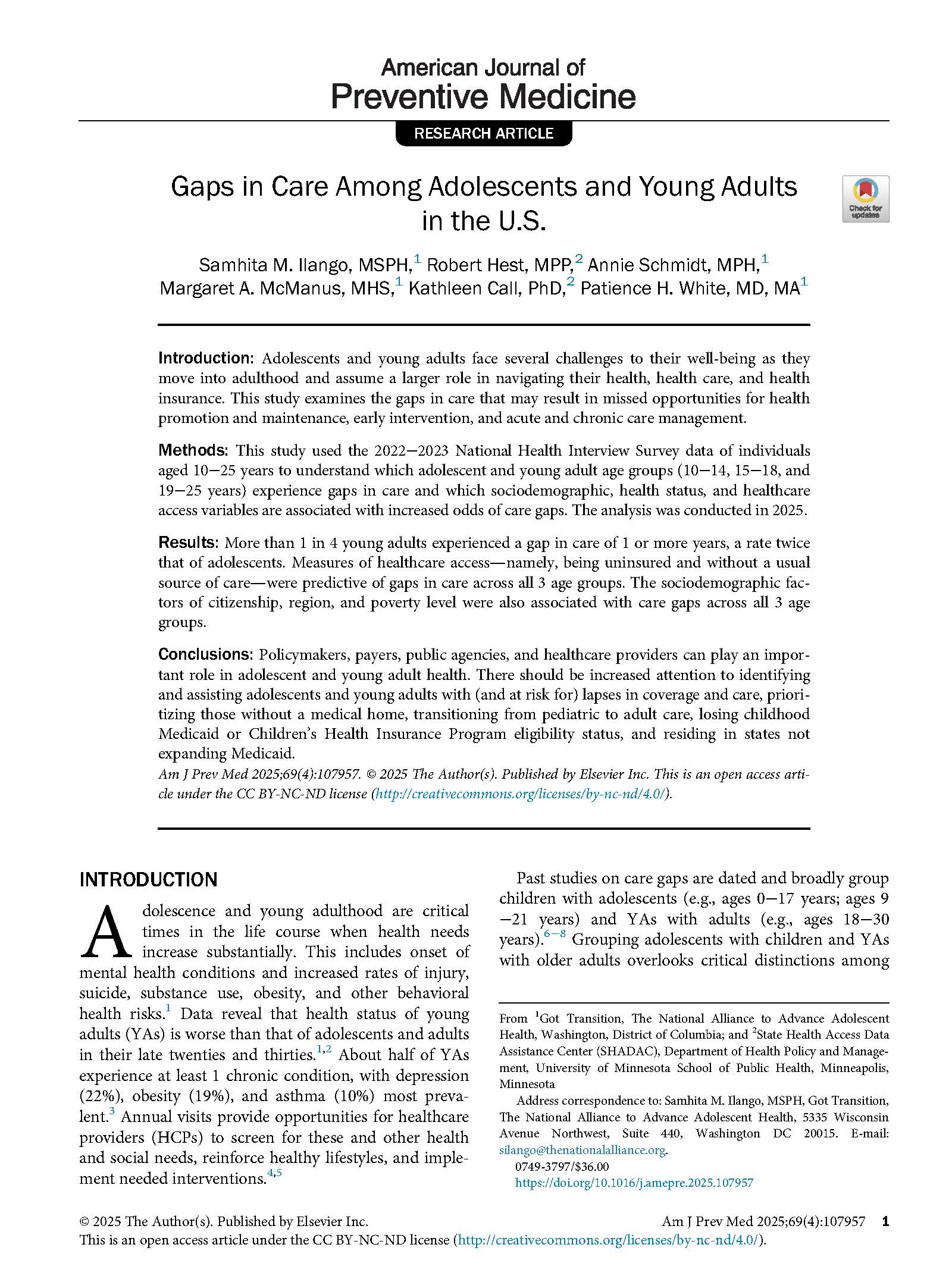
As adolescents and young adults transition into adulthood and have a larger role in navigating their own health care, they are confronted with many challenges to their well-being. An article in the American Journal of Preventive Medicine describes a study looking at gaps in care that may lead to missed opportunities for health promotion and maintenance, early intervention, and acute and chronic care management. Using 2022-2023 National Health Interview Survey data, the researchers investigated which adolescent and young adult age groups experience gaps in care and the sociodemographic, health status, and healthcare access variables associated with the increased likelihood of care gaps.
The results revealed that 1) more than 1 in 4 young adults experienced a care gap of 1 or more years, 2) being uninsured and without a usual source of care was predictive of care gaps across all three age groups, and 3) sociodemographic factors of citizenship, region, and poverty level were connected to care gaps across all three age groups. The authors conclude that stakeholders, such as policymakers and payers, should prioritize identifying and supporting adolescents and young adults with, and at risk for, lapses in coverage and care – especially those transitioning from pediatric to adult care.
Download the PDF below.
Journal Article