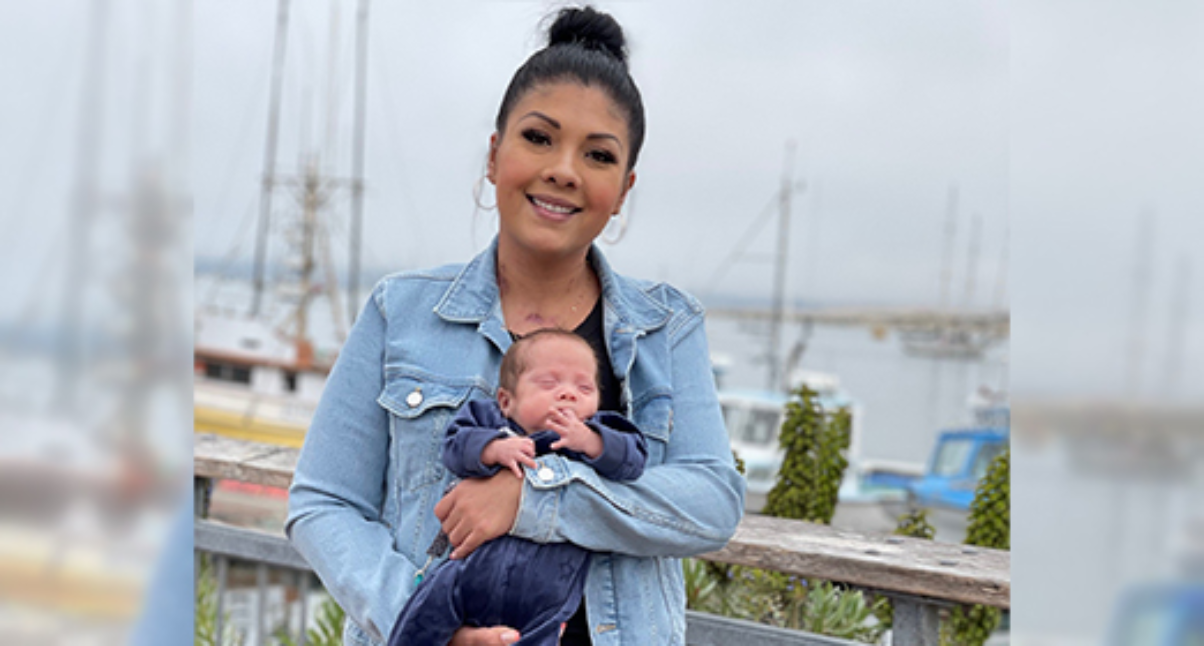
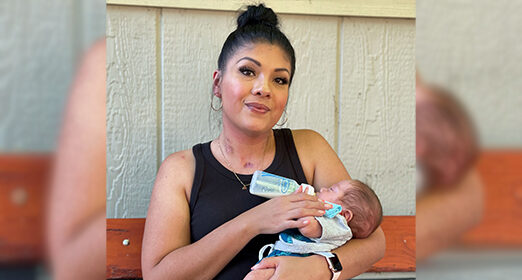
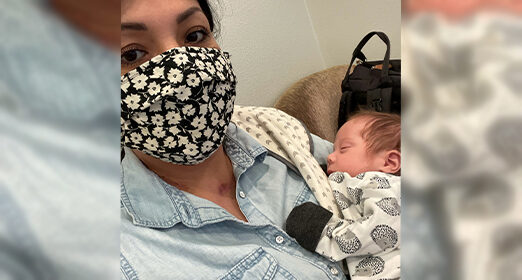
At 20 weeks, a pregnant mother contracted COVID-19. Lorena Granados and her baby were in grave danger. A team of Stanford specialists from cardiovascular intensive care, critical care, trauma, anesthesia, obstetrics, maternal-fetal medicine, neonatology, and pediatrics tirelessly collaborated to save them.
“If Stanford was not Stanford, this case would have been extraordinarily difficult to manage,” says Yasser El-Sayed, MD, obstetrician in chief. “It took all of us collaborating, sometimes minute by minute, to keep Lorena alive and keep her pregnant so baby Matthias could grow and survive.”
Matthias entered the world at 29 weeks—young, but not so young that he’d have serious complications. He spent several weeks in the Neonatal Intensive Care Unit (NICU), where he remained COVID-free and received help breathing to support his lungs and help him grow strong.
Read more about Lorena and baby Matthias.
This incredible story is just one example of how the Lucile Packard Children’s Hospital Stanford team fights for the health of our community. On World Humanitarian Day (and every day), we honor and thank everyone—including donors like you—who go above and beyond to make successes like this possible.
I want to personally thank you for your invaluable support that makes our hospital’s expert care and groundbreaking discoveries possible. When you give, you transform health for children and expectant mothers—in our community and around the world.