Perspectives of Spanish-speaking Caregivers on Pediatric Patient Portal Use
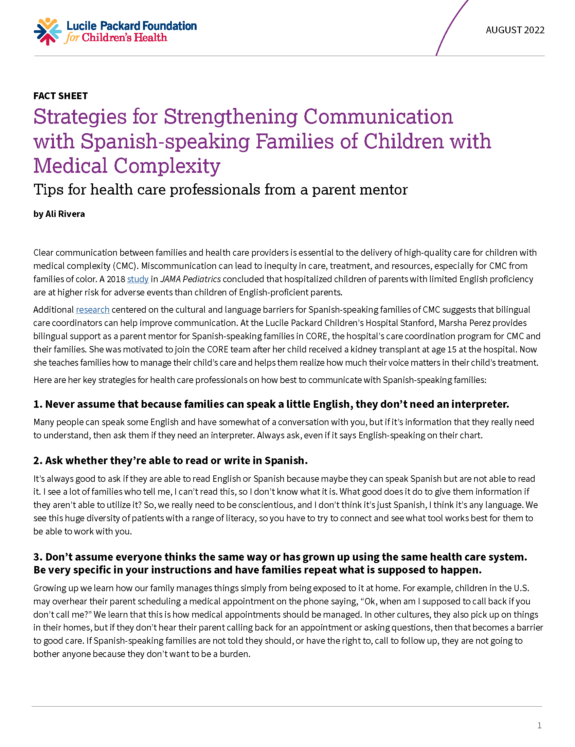
Patient portals are a digital health tool that help patients access personal health records, make appointments, and take other steps to engage with their health care. While the patient portal usage and experiences of adults with a preferred language other than English (LOE) are well-documented, there is a lack of knowledge of how caregivers of pediatric patients with LOE use patient portals. This gap could lead to more disparities between adult and pediatric populations.
This study, published in Applied Clinical Informatics, looked at how Spanish-speaking caregivers use patient portals and identified facilitators and barriers, particularly for caregivers of children with chronic conditions. Through interviews and surveys with Spanish-speaking caregivers of pediatric patients with chronic conditions in California, the research team identified perceived benefits, facilitators that improved use of patient portals, and barriers that negatively affected use. The authors conclude that while patient portals are beneficial for managing a child’s health care, language barriers and differences in digital and health literacy are significant challenges for caregivers. Furthermore, the authors highlight the need for health systems to provide language concordance within patient portals and consider innovative solutions to advance equitable health care access for Spanish-speaking patients and caregivers.
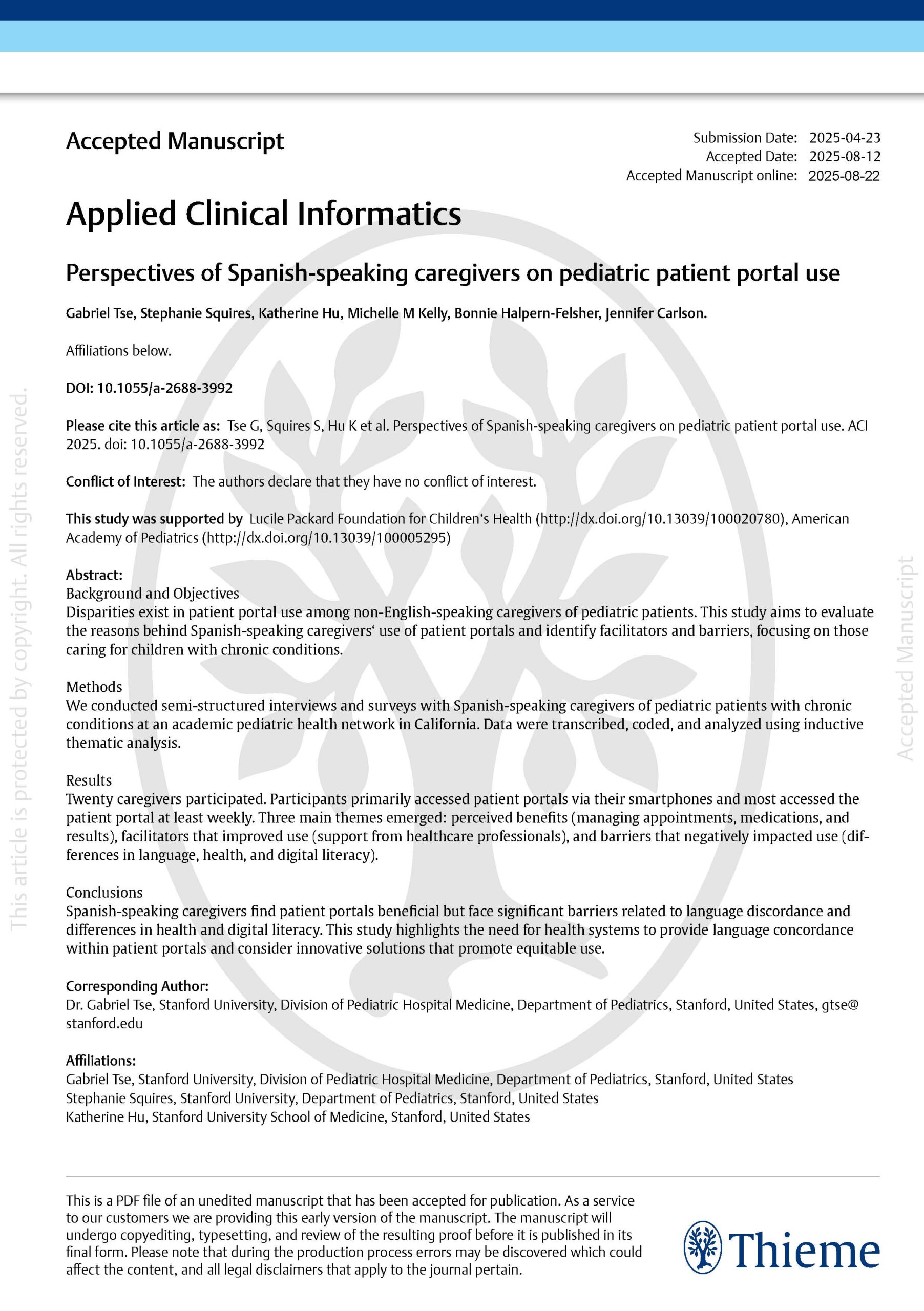
Download the PDF below.
Journal Article