
At just 3 months old, Ryan was diagnosed with acute myeloid leukemia (AML), a rare and aggressive blood cancer. For his parents, Carmen and Steven, life changed in an instant. “I had no idea what neutrophils were. I didn’t even really know what leukemia was,” recalls Steven. “It was a completely foreign world—shocking, terrifying. Nothing prepares you for that when you have a baby.”
After six months and five rounds of inpatient chemotherapy at their local hospital, Ryan achieved remission. But just after his second birthday, the leukemia returned, this time spreading to his central nervous system. Tumors around his optic nerves threatened not only his vision but his life.
With standard treatments exhausted, Ryan’s parents were told his only remaining option was an expanded access study, which would allow him to receive an experimental treatment not yet approved by the U.S. Food and Drug Administration. But after arriving at the initial study site, they learned there would be a delay before treatment could begin.
As they waited, Ryan underwent emergency radiation to slow the cancer’s progression. The treatment bought precious time, but aggressive AML and radiation-induced inflammation ultimately cost Ryan his eyesight. Meanwhile, the leukemia continued to advance, leaving him with only days to live.
“We were watching our son die in front of us,” Steven remembers.
Determined not to give up, Steven began emailing anyone who might be able to help. Eventually, he reached someone at a pharmaceutical company, who explained that regulatory approvals, not the medication itself, were causing the delay.
The representative urged the family to transfer Ryan to Lucile Packard Children’s Hospital Stanford, where approvals for the experimental treatment’s study were already in place.
Finally, they had a path forward.
Moving Mountains
On a Thursday morning in February 2024, Nancy Sweeters, RN, PNP, associate director of the Pediatric Hematology/Oncology Research Group and Clinical Operations at the Stanford Cancer Institute Clinical Trials Office, received an urgent text: “We hear you have the pediatric Syndax study open. Do you have the drug available? We need to transfer a kid to Stanford today.”
Under ordinary circumstances, transferring a patient and enrolling them in an expanded access study would take more than a week. Ryan didn’t have that kind of time. So, the Packard Children’s team jumped into action.
“If there is a child that needs to go on a study, we’ll move mountains to get it done,” Sweeters says.
She immediately contacted Stanford Cancer Institute leader Tanja Gruber, MD, PhD, who is also the Chambers Family Endowed Professor for Pediatric Cancer and director of the Bass Center for Childhood Cancer and Blood Diseases at Packard Children’s. Together, they mobilized an extensive multidisciplinary team to coordinate Ryan’s transfer, gather clinical records, secure insurance authorization, and obtain an inpatient bed.
Twelve hours after that first text message, Ryan arrived by ambulance at our hospital.
The next day, physician-scientist Norman Lacayo, MD, enrolled Ryan in the expanded access study.
Before he could receive the medication, Ryan needed blood tests, electrocardiograms, and numerous protocol-required screenings. The Packard Children’s team also had to determine which tests had already been completed elsewhere, transfer those results, and complete everything remaining—all within a single day.
Physicians, nurses, pharmacists, research coordinators, laboratory staff, and EKG technicians worked late into the evening. Every detail mattered.
That level of coordination doesn’t happen by accident. Philanthropic support helps sustain the clinical research infrastructure, specialized teams, and collaborative environment that make it possible for Packard Children’s to rapidly open doors to promising therapies for children facing life-threatening illnesses.
At Long Last
On a rainy Friday night, Ryan finally received his first dose of the experimental drug.
“We arrived at Stanford at 10 p.m. Thursday, and by 9 p.m. the next day, Syndax was flowing through his body,” Steven recalls.
Only about 20% to 30% of pediatric AML patients respond to the drug. Ryan was one of them.
Initial imaging revealed tumors throughout his brain and spinal cord, placing him at risk of paralysis.
“He responded quickly and beautifully,” Lacayo recalls. “The treatment prevented him from becoming paraplegic, but unfortunately, it was unable to reverse the damage to his optic nerve and restore his vision.”
One of the earliest signs of improvement came when Ryan regained bladder function after tumors pressing on his spinal cord began shrinking.
“Before we arrived at Stanford, he would just lie on our chest, completely still—nothing at all for months. But after those 10 days of treatment, he sat up, and that’s when we knew he was starting to feel better,” Steven says.
Steven and Carmen also recall another milestone: when they saw Ryan’s personality begin to return as a music therapist played “Five Little Speckled Frogs,” and Ryan slowly moved to the beat.
The Road Home
Once the leukemia became undetectable, Ryan was eligible for a stem cell transplant.
In May 2024, he received a haploidentical transplant using donor stem cells from Steven. The months that followed brought complications and a difficult recovery, but by September Ryan was finally discharged, just in time to celebrate his third birthday at home.
In November 2024, the FDA approved the drug Ryan received for relapsed or refractory acute leukemia, making the therapy more broadly available to future patients.
Ryan’s story might have ended differently without his parents’ persistence—and without a leading children’s hospital prepared to move with extraordinary speed.
It Takes a Village
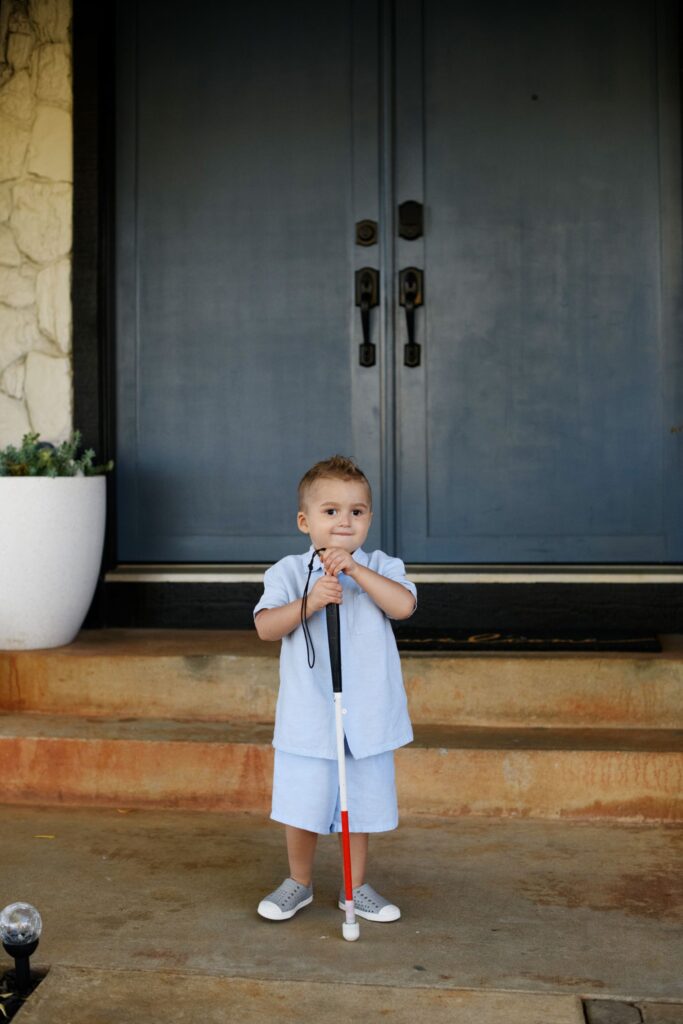
“We didn’t know how we’d come home with a blind toddler or what life would be like,” Carmen says. “Today, he’s learning to use his cane, read with his fingers, play, explore the world, and most of all, he is happy. As parents, that’s all we want. All the tears and heartbreak—it’s worth it.”
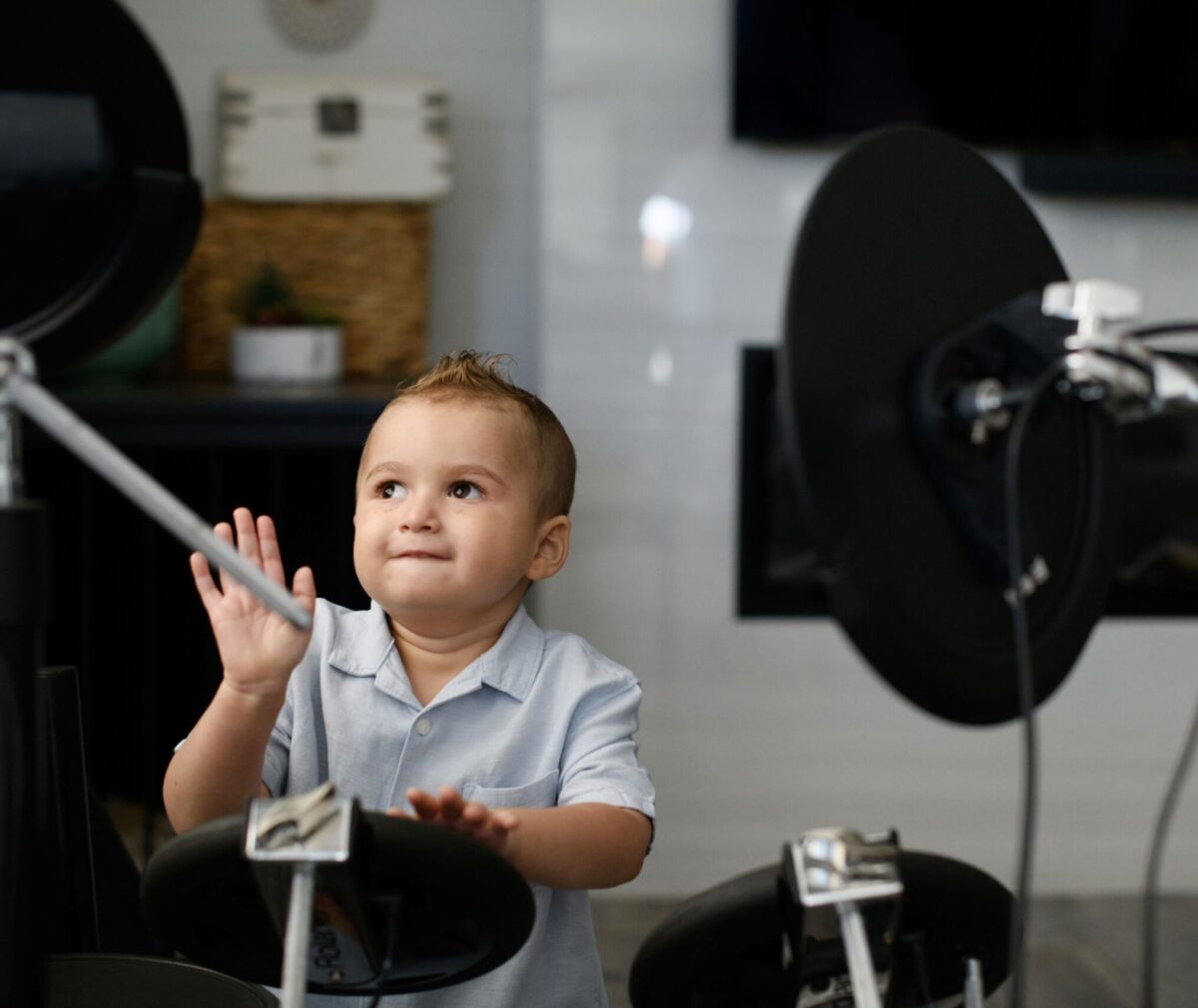
Ryan recently celebrated his fifth birthday and continues to show his resilience through music and joy—drumming to the beat of his favorite songs and playing with the family’s dogs.
As Ryan’s parents reflect on how far they’ve come, what stands out isn’t only the lifesaving care Ryan received but also the relationships they built with their interdisciplinary medical team.
“There are so many individuals to thank—from doctors and nurses to specialists and support staff, each playing a vital role in my son’s care,” Carmen says.
Lacayo is quick to redirect the credit.
“You meet these families at the most difficult moments of their lives, and it’s humbling to be in a position to help,” he says. “I didn’t develop the drug—I simply had access to it and decades of experience treating children with acute myeloid leukemia. Behind me, there’s an incredible team making all of this possible.”
Carmen and Steven are deeply grateful for the donors who helped ensure the team at Packard Children’s was there when they needed them—from funding groundbreaking research to supporting the music therapy program that brought Ryan joy in his darkest days.
“It means the world to us that we were able to be there and in the clinical trial,” Carmen says. “I want people to know that it’s because of them that Ryan has a second chance at life. What they did and gave matters.”